Why a Diagnostic Comes First
When parents search for SHSAT practice, the temptation is to buy a large workbook immediately. That can work, but it often hides the real question: what does this student actually need to improve first?
A diagnostic gives the family a starting map. It can reveal whether the main issue is ELA reading stamina, revising and editing, algebra fluency, geometry, word-problem translation, grid-in accuracy, pacing, or careless mistakes.
What a Useful SHSAT Diagnostic Should Show
A useful diagnostic should include both ELA and math, a way to review missed questions, and enough structure for a parent to see patterns. It should not just return a raw number and leave the family guessing.
The best diagnostic result is a short list: keep practicing this, review this, and stop wasting time on skills the student already handles well.
How Parents Can Review the Results
After the test, group mistakes by type rather than only counting wrong answers. For ELA, note whether misses came from grammar, sentence clarity, passage evidence, or stamina. For math, separate calculation errors from concept gaps and setup mistakes.
This turns one test into a practice plan. The parent does not need to become a tutor; they need a simple way to choose the next practice block.
What to Do After the Diagnostic
If the diagnostic exposes only one weak area, a focused drill pack may be enough. If it shows mixed weakness across ELA and math, a structured summer sprint is a better next step.
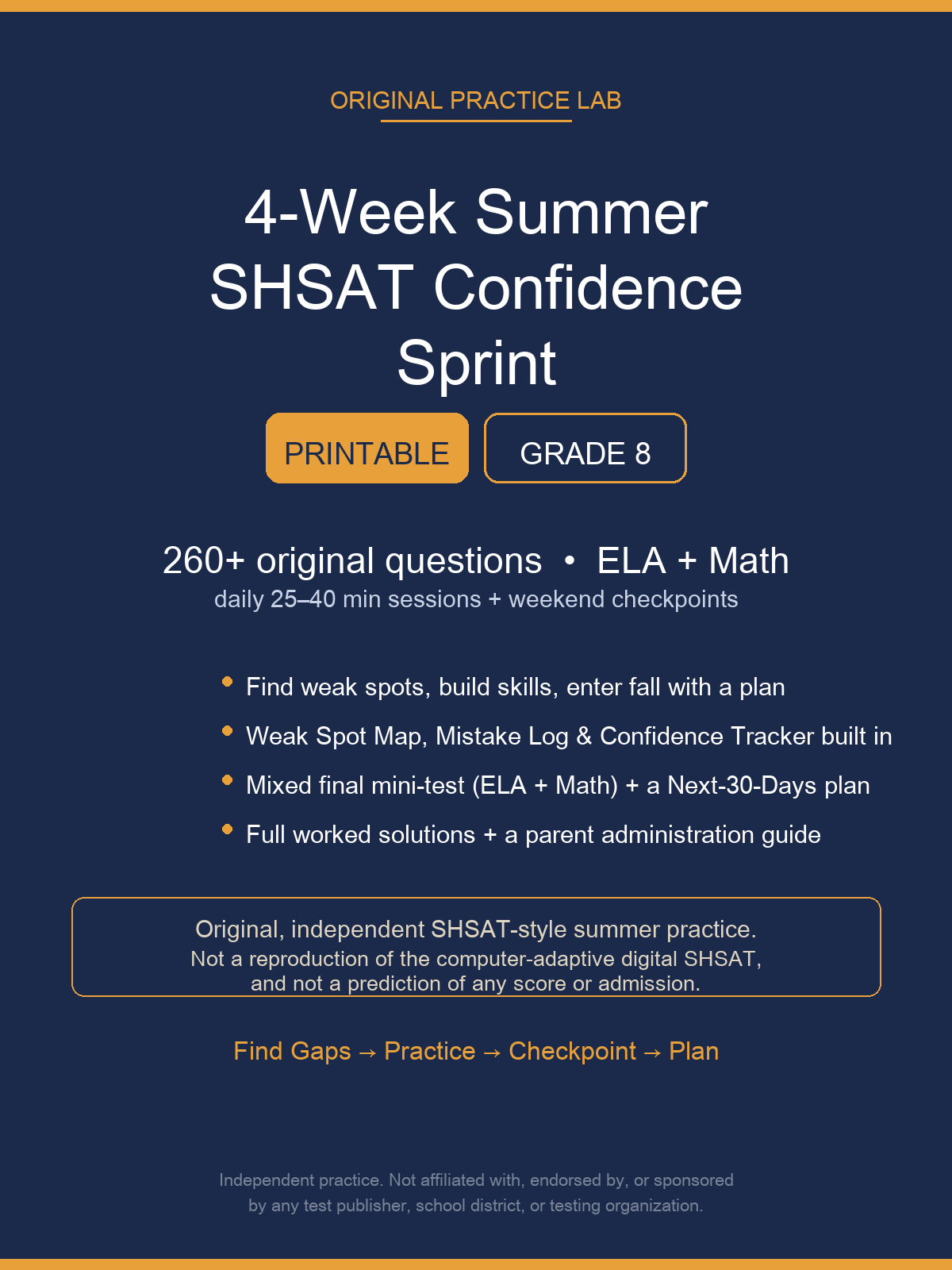
The Original Practice Lab funnel is built around this sequence: start with the $1.99 SHSAT-style paper diagnostic, then continue with the 4-week Summer SHSAT Confidence Sprint if your child needs daily structure.