The Parent Question: Full Practice Test or Daily Drills?
For summer SHSAT prep, many parents get stuck between two choices: give a full practice test now, or start with daily ELA and math drills. Both can help, but they solve different problems.
A SHSAT-style practice test is best when you need a baseline. Daily drills are best after you know which skills need attention. Starting with drills before you know the weak spots can waste summer time on topics your child already handles well.
Use a Practice Test When You Need a Map
A good first practice test should show patterns: reading stamina, revising and editing, algebra, ratios, geometry, word-problem setup, grid-in accuracy, pacing, or careless mistakes.
This is why a low-cost printable diagnostic can be useful before fall. It gives the parent a concrete list of what to practice next instead of relying on a vague feeling that the child needs more prep.
Use Daily Drills After You Know the Weak Spots
Once the weak spots are visible, short daily practice becomes more useful. A 20- to 40-minute routine can include one ELA set, one math set, quick scoring, and a few minutes of mistake review.
The key is to avoid turning every day into another full test. Over the summer, most families need sustainable practice, not constant high-pressure testing.
A Simple Sequence for Rising Grade 8
Week 1: take a diagnostic and sort missed questions by skill. Week 2: practice the two or three weakest ELA and math areas. Week 3: add mixed practice and pacing. Week 4: review recurring mistakes and do a final confidence check.
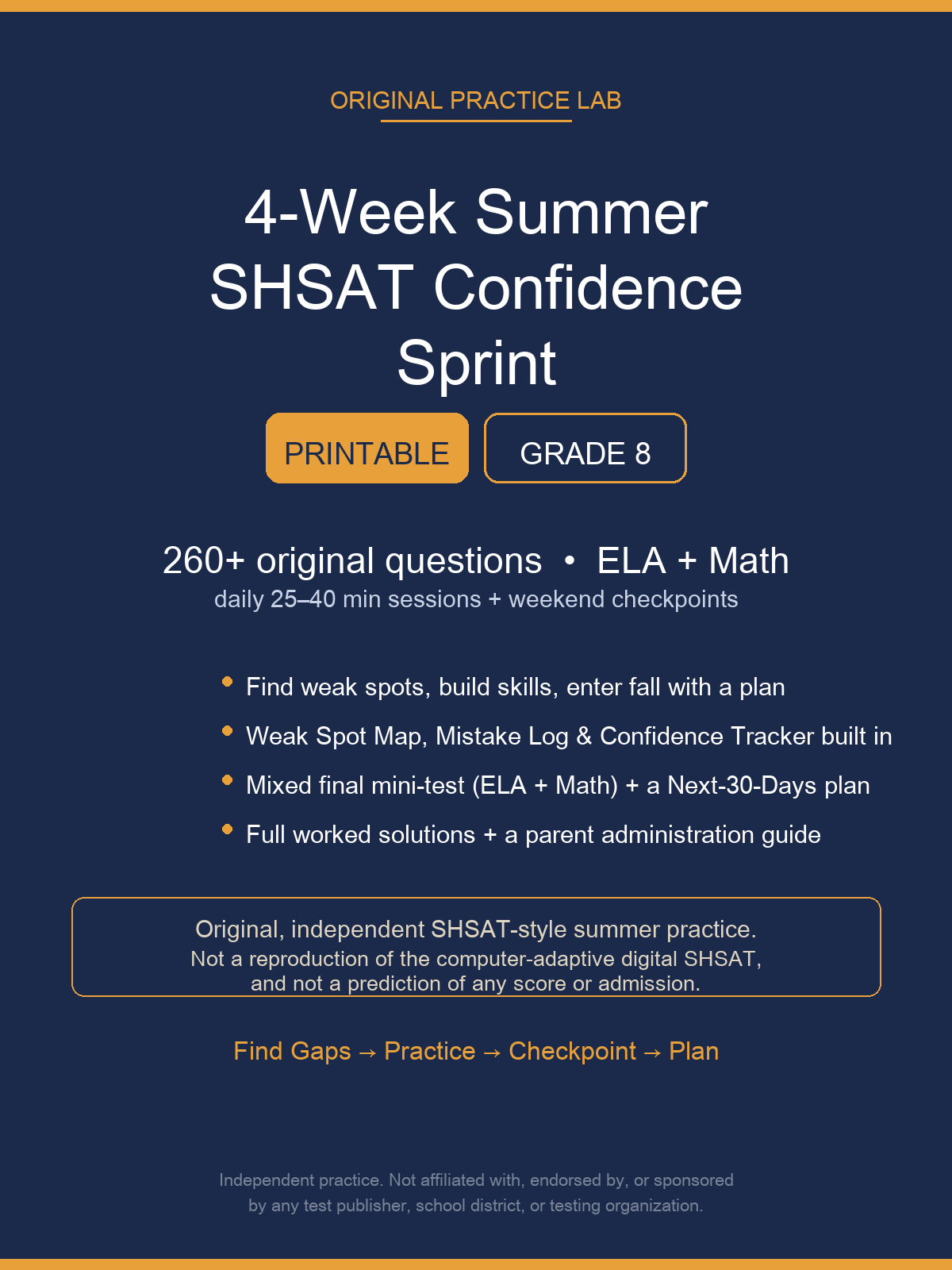
That sequence is the logic behind Original Practice Lab's SHSAT path: start with the $1.99 printable practice test, then use the 4-week Summer SHSAT Confidence Sprint if your child needs a daily structure.