Why Summer Is the Right Time to Start
For many NYC families, the hardest part of SHSAT prep is not motivation. It is knowing what to do first. Summer is useful because a rising Grade 8 student can find weak spots before schoolwork, activities, and fall test pressure all arrive at once.
The goal is not to finish every possible topic in June or July. The goal is to learn where the student is losing points: reading stamina, revising and editing, algebra, geometry, word problems, grid-in questions, pacing, or careless review habits.
Step 1: Use One Diagnostic Before Buying Bigger Prep
Start with one paper-style diagnostic sitting. It does not need to be perfect, and it does not need to predict a final score. It should show which areas need attention and whether the student can handle a longer timed practice block.
Original Practice Lab's SHSAT-style diagnostic is built for this exact first step: a low-cost printable test with ELA, math, worked solutions, and a parent guide.
Step 2: Turn Weak Spots Into Daily Practice
After a diagnostic, parents should avoid random worksheets. A better summer plan is short, repeated practice across ELA and math with immediate review of missed questions.
A practical schedule is 20 to 40 minutes per day: one focused set, quick scoring, mistake review, and a note about what to revisit later.
A Simple 4-Week SHSAT Summer Structure
Week 1 should establish the baseline and review core weak spots. Week 2 should add more targeted ELA and math reps. Week 3 should increase mixed practice and pacing. Week 4 should combine review, stamina, and a final confidence check.
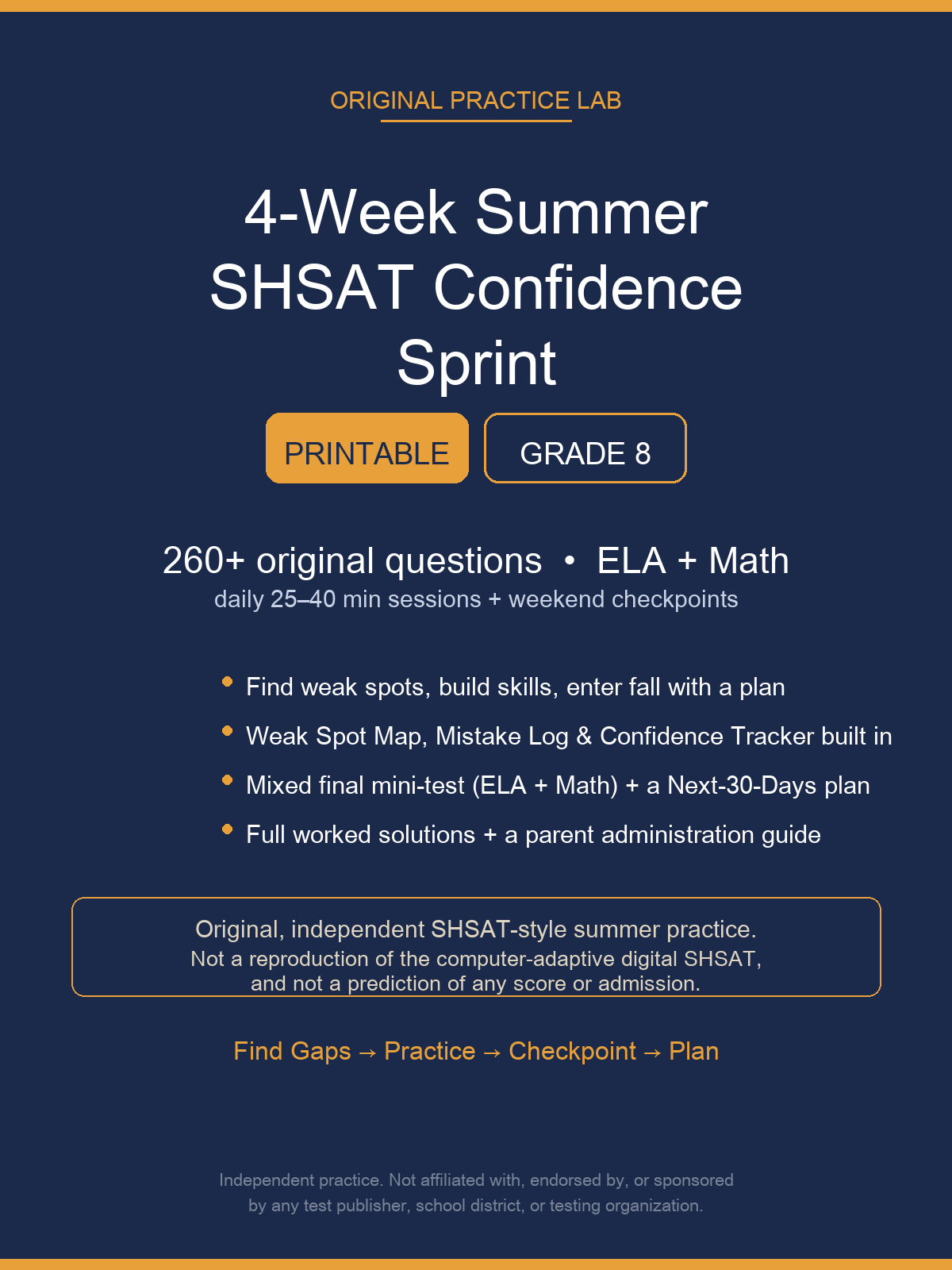
This is the logic behind the 4-Week Summer SHSAT Confidence Sprint: it gives parents a printable daily path after the diagnostic, with original SHSAT-style ELA and math questions, worked solutions, and parent-guided review.